

Legionella Testing for Care Homes
Caring for vulnerable residents means leaving nothing to chance. Testing for Legionella isn’t just about compliance. It’s essential protection. At AquaCert, we deliver fast, UKAS-accredited legionella testing for care homes, handling everything from sampling to compliance so that you can focus on safe, high-quality care with complete confidence.
Protecting Your Residents: Why Legionella Testing is Critical in Care Settings
Elderly residents and those with underlying health conditions are far more vulnerable to Legionnaires’ disease, making water safety a serious concern in care environments. In 2024, 472 cases of legionellosis were reported across England and Wales, with nearly two-thirds affecting people aged 60 and over.
Legionella bacteria can develop within complex water systems, especially where water stagnates or temperatures fluctuate. Inhaling contaminated droplets from showers or taps can lead to severe illness.
Regular legionella testing in care homes allows you to detect risks early, take swift action, and maintain a safe environment, protecting residents while reinforcing your duty of care.
Meeting CQC and HSE Standards for Legionella Monitoring
Effective Legionella control is a legal requirement and a key part of delivering safe care. Under the Health and Social Care Act 2008 (Regulated Activities) Regulations 2014, care providers must identify risks and maintain safe premises, including water systems. The Health and Safety Executive’s HSG274 guidance also outlines the need for routine sampling, particularly in high-risk environments like care homes.
CQC inspectors expect clear evidence of compliance, including risk assessments, written control schemes, and up-to-date test results that help ensure compliance with current water hygiene regulations. AquaCert provides UKAS-accredited care home Legionella testing and documentation that demonstrates a proactive approach to water hygiene and helps ensure compliance with regulatory standards.
Our Care Home Testing Process: From Sampling to Results
At AquaCert, we have refined our testing process to be as simple and non-disruptive as possible.
1. Easy On-site Sampling
We provide a complete testing kit with clear, step-by-step instructions. Your staff can take the samples from infrequently used outlets, TMVs, or water tanks within hot and cold water systems at a time that suits your daily routine. No specialist engineering knowledge is required to fill our sample bottles correctly.
2. Fast Track Courier
Once the samples are taken, you simply notify us. We arrange a free courier pickup, ensuring the stagnant water samples reach our laboratory quickly to maintain the integrity of the bacteria count.
3. UKAS Laboratory Analysis & Certificate
Your samples are analysed in our UKAS-accredited laboratory. Within days, you receive a clear, easy-to-read report and a formal certificate of analysis. These digital records are stored securely, ensuring you are always ready for a surprise inspection.
Fast, UKAS-Accredited Legionella Testing Kits
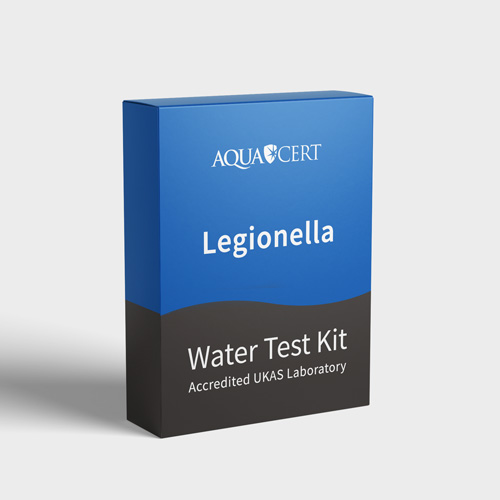
Our Legionella testing care home kits are the gold standard for the sector. Every kit includes everything you need to identify and monitor Legionella bacteria without needing an external contractor to visit your site every month.
Key features of our solution include:
- UKAS-Backed Analysis: All tests are performed to the highest scientific standards, providing total peace of mind.
- Free Courier Collection: We handle the logistics so you don’t have to worry about postage or transport.
- Proactive Reminders: We will alert you when your next regular testing cycle is due, ensuring you never fall out of compliance.
- Record-Keeping Support: Our digital certificates make it easy to demonstrate your health and safety efforts to local authority health officials and CQC inspectors.
By using our kits, you reduce the admin burden on your management team. You gain the expertise of a specialist laboratory with over 30 years of experience, all while maintaining the flexibility to manage your water testing on your own terms.
Where Legionella Thrives in Residential Care Environments
In a residential care setting, there are several “blind spots” that require specific attention during a Legionella risk assessment for care homes.
Thermostatic Mixing Valves (TMVs)
While TMVs are essential for preventing scalding, they often create areas of lukewarm water where Legionella bacteria can flourish. If these valves are not regularly serviced and tested, they become a primary source of risk.
Infrequently Used Guest Rooms
If a room sits empty for several weeks, the water in the pipes becomes stagnant. These infrequently used outlets should be flushed regularly and sampled as part of your monitoring routine.
Hydrotherapy Baths and Sluice Rooms
Any equipment that creates a fine spray or aerosol is a higher risk point. This includes specialised bathing equipment and even simple showerheads that haven’t been cleaned or descaled recently.
Water Tanks and Dead Legs
Older care home buildings often have legacy plumbing, including large water tanks, ageing cold water systems, or “dead legs” (pipes that lead nowhere). These areas allow bacteria to accumulate and should be a focus for remedial works or regular temperature checks.
Understanding Your Legionella Test Certificate
Laboratory reports can feel technical, but at AquaCert, we make them clear and actionable.
A “Not Detected” result means legionella levels are below the laboratory threshold—exactly what you want from routine monitoring. If bacteria are present, your report will show the concentration (cfu/l) alongside guidance aligned with HSE standards.
We don’t just present results. We explain what they mean and what to do next. Whether it’s recommending chlorine dioxide treatment, adjusting hot water temperature controls, or urgent remedial action, our experts provide straightforward advice.
With practical support to resolve risks quickly and keep your water systems safe, you’ll never be left guessing.
Why UK Care Operators Trust AquaCert for Legionella Analysis
With over two decades of specialist experience, AquaCert has become the trusted partner for care homes, nursing homes, and hospitals across the UK. We understand that staying compliant is a constant challenge, which is why we are your long-term compliance partner rather than just a one-off supplier.
We combine technical laboratory excellence with practical, friendly support.
We know that many care facilities are operating on tight margins, so we focus on controlling Legionella through simple, effective methods that avoid unnecessary and expensive remedial works. When you choose AquaCert, you are choosing a company where 100% of customers would recommend our services.
More Than a Test Provider – A Compliance Partner for Care Homes
Care homes face increasing pressure to demonstrate that their water systems are being monitored effectively and that Legionella risks are being properly managed. While many organisations can provide guidance or testing, few offer support throughout the entire compliance process.
Guidance without practical support
Regulatory bodies such as the HSE and CQC establish the standards care homes must meet, but they do not provide testing services or help manage ongoing monitoring requirements.
This leaves many care providers responsible for interpreting regulations, arranging testing, and maintaining the records needed to demonstrate compliance.
Laboratory testing is only part of the process
Many laboratories can analyse samples and issue results, but care, home managers are often left to determine what those results mean and what action should be taken next.
Without clear guidance, managing Legionella compliance can become time-consuming and unnecessarily complex.
Reducing the administrative burden
AquaCert is designed to make Legionella monitoring easier for busy care teams. We help streamline the process through:
- Easy-to-use testing kits
- Free courier collection of samples
- Fast laboratory analysis
- Clear compliance reporting
- Automated testing reminders
- Practical follow-up recommendations
Supporting inspection readiness
Every test includes a certificate of analysis and documentation that can be retained as part of your compliance records.
Whether you’re preparing for a CQC inspection, reviewing your water safety procedures, or carrying out routine monitoring, you’ll have the evidence needed to demonstrate a proactive approach to managing Legionella risks.
A trusted compliance partner
Rather than simply providing test results, AquaCert helps bridge the gap between sample collection and documented proof of water safety. By combining UKAS-backed laboratory analysis with practical support and ongoing guidance, we help care homes maintain confidence in their compliance programme while protecting residents, staff, and visitors.
Frequently Asked Questions
How often should care homes test for Legionella?
Recommended Legionella testing frequency in care settings depends on your specific Legionella risk assessment. However, due to the vulnerability of residents, most healthcare providers opt for quarterly or bi-annual sampling of high-risk outlets to ensure ongoing safety.
What happens if our care home water test returns a positive result?
If bacteria are detected, AquaCert provides immediate expert advice. Depending on the levels found, this may involve re-testing, initiating legionella water treatment in care homes, or reviewing your temperature monitoring and staff training protocols.
Do CQC inspectors accept these testing kits?
Yes. Our analysis is conducted in a UKAS-accredited laboratory, which is the gold standard for compliance. The certificates we provide are exactly what CQC and HSE inspectors expect to see as proof of a robust water safety regime.
Why is Legionella testing important in care homes?
Legionella testing is especially important in care homes because residents are often among the highest-risk groups for developing Legionnaires’ disease. Older adults and those with underlying health conditions are more vulnerable to severe illness caused by inhaling contaminated water droplets from taps, showers, or other outlets.
What is Legionnaires’ disease?
Legionnaires’ disease is a potentially fatal form of pneumonia caused by Legionella bacteria. The bacteria spread through inhaling fine droplets of contaminated water rather than through drinking water.
Why are care home residents more at risk from Legionella?
People over 50, particularly those over 70 and with weakened immune systems and chronic respiratory conditions, are more susceptible to Legionnaires’ disease and can face more serious complications. In care homes, residents may also have existing health conditions that increase their vulnerability.
What conditions allow Legionella bacteria to grow?
Legionella bacteria thrive in stagnant water and temperatures between 20°C and 45°C. Poor water circulation, unused outlets, and temperature fluctuations are all recognised risk factors for bacterial growth within a care home water system.
How can care homes reduce the risk of Legionella?
Effective control measures include regular flushing of infrequently used outlets, temperature monitoring, cleaning and descaling showerheads and taps, and routine legionella testing. These steps help reduce biofilm, limescale, and stagnant water where bacteria can multiply.
What temperatures should water systems be maintained at?
To minimise Legionella growth, hot water should typically be stored above 60°C and cold water kept below 20°C. Regular temperature checks are essential to confirm the system is operating safely.
What should a Legionella risk assessment include?
A Legionella risk assessment should review the entire hot and cold water system, identify potential risks, and outline suitable control measures. It should also assess factors such as water temperatures, infrequently used outlets, aerosol generation and vulnerable residents.
Who can carry out a Legionella risk assessment?
Legionella risk assessments should be completed by a competent person with the appropriate knowledge and experience. Assessments should also be reviewed regularly or whenever significant changes are made to the building or water system.
What records should care homes keep for Legionella compliance?
Care homes should maintain a detailed legionella control logbook containing risk assessments, monitoring records, flushing schedules, maintenance reports, cleaning records, and water testing results. These records help demonstrate ongoing compliance and effective water safety management.
Are care homes legally required to manage Legionella risks?
Yes. Care homes must comply with legislation, including the Health and Safety at Work Act 1974, COSHH Regulations 2002 covering substances hazardous to health, and HSE Approved Code of Practice ACoP L8. The Care Quality Commission also expects providers to demonstrate effective water safety management systems.
What happens if a care home fails to control Legionella risks?
Failure to manage risks can lead to serious consequences, including Legionella outbreaks, enforcement action, substantial fines, and potential criminal prosecution. Proper testing, monitoring, and maintenance help protect residents, staff, and visitors while supporting legal compliance.
Who is responsible for Legionella control in a care home?
The responsible person for Legionella management in a care home is typically the duty holder, manager, or another designated individual with authority over water safety procedures. They are responsible for overseeing monitoring, maintenance, and ensuring appropriate control measures are followed throughout the property.
Order Your Care Home Testing Kit Today
Ensure the safety of your residents and the compliance of your facility with the UK’s leading Legionella testing company. Order your UKAS-accredited kit online today or speak to one of our testing experts to discuss a multi-site monitoring plan.